
In the last two days of this wild dash around Sardinia I’ve been steeped in the work of two very different designers. The macro climate and situation of their gardens were roughly the same (albeit with microclimatic variations), but the approaches, and the results, could hardly be more different.

One designer – Marco Scano – celebrates the unique aesthetics of the Mediterranean – all it’s pared back, desaturated colours and wind-swept, semi-stunted plant forms. The results were mind-blowingly good. I found myself spinning on the spot, taking pics in every direction.
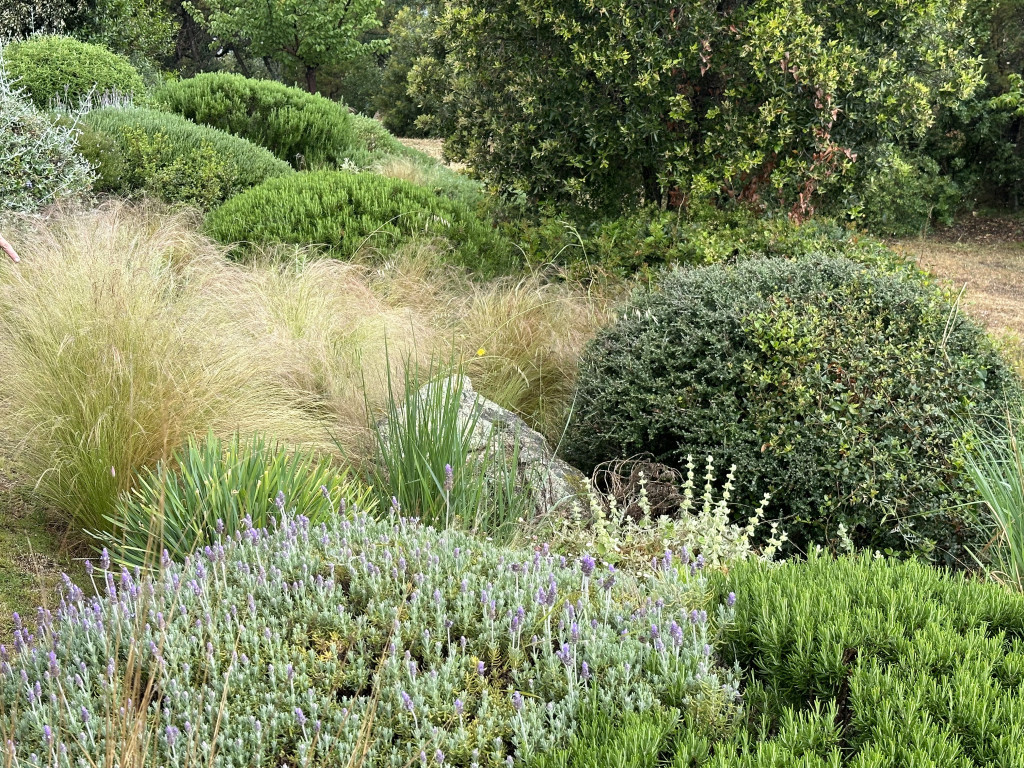
The consequent images don’t, unfortunately, do justice to what I experienced. This was one day in which I regretted my decision not to bring my mirrorless camera, and to opt for the phone camera instead.
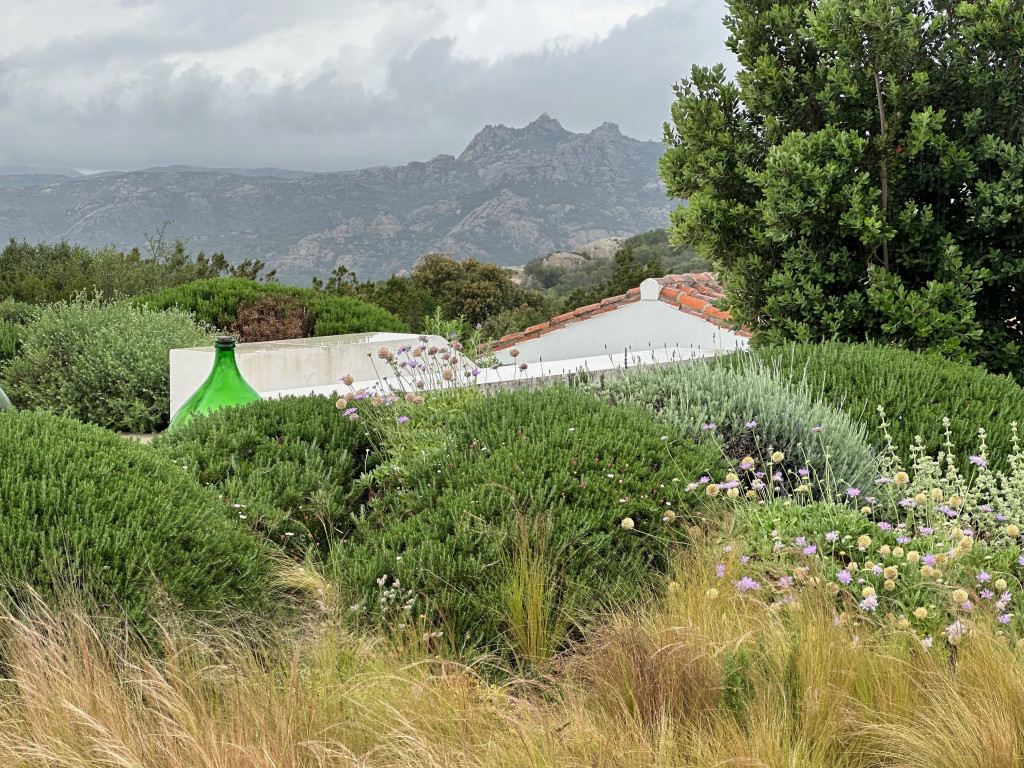
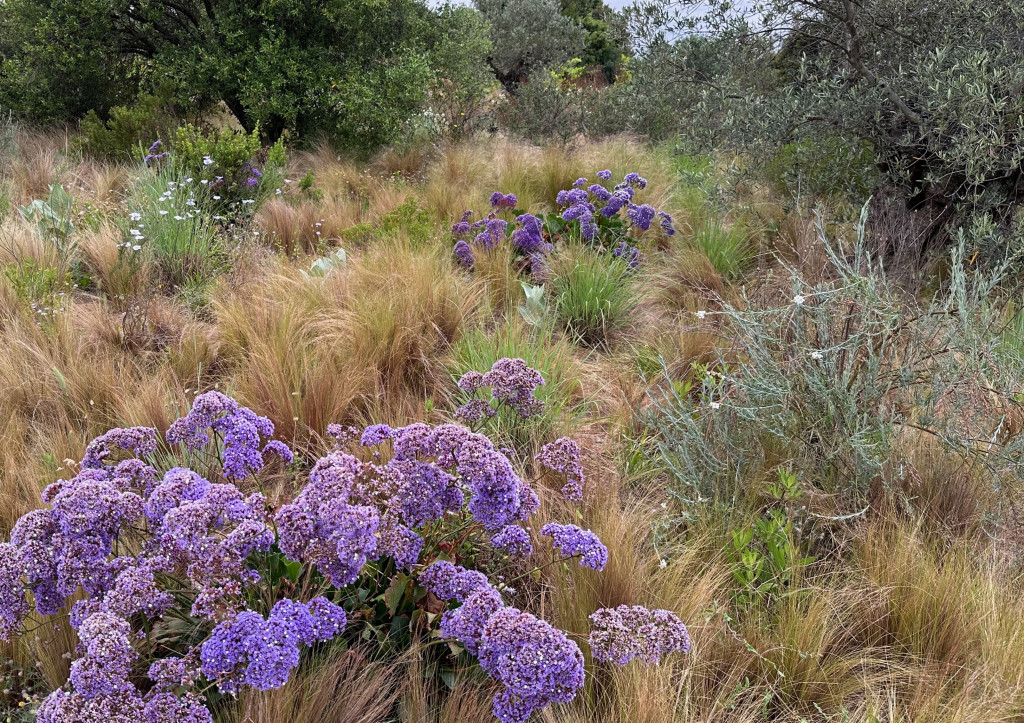
Marco is currently working on a Ph.D project with James Hitchmough, taking the ‘Woody Meadow’ project that first emerged in Melbourne to a different climate and a different level of comparative rigour. But he’s been working in the Mediterranean style for years, and, in the case of the most developed of the gardens I saw, also with matrix planting in which a grassy sward is spangled with plants of contrasting leaf form and floral punch.
The other designer – Maurizio Usai – celebrates what this hot, challenging climate can achieve with careful microclimatic selection and manipulation, and with a natural water source. The result is a plantsman’s paradise in which massive botanical diversity is used so so enchantingly that you kind of lose balance.
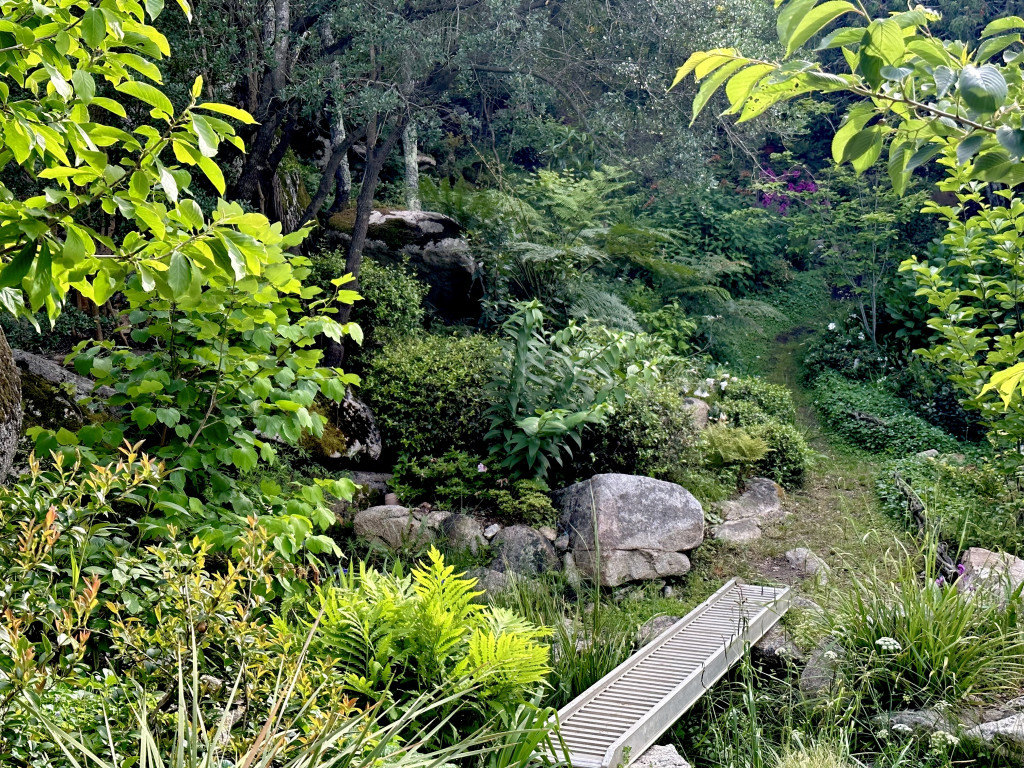
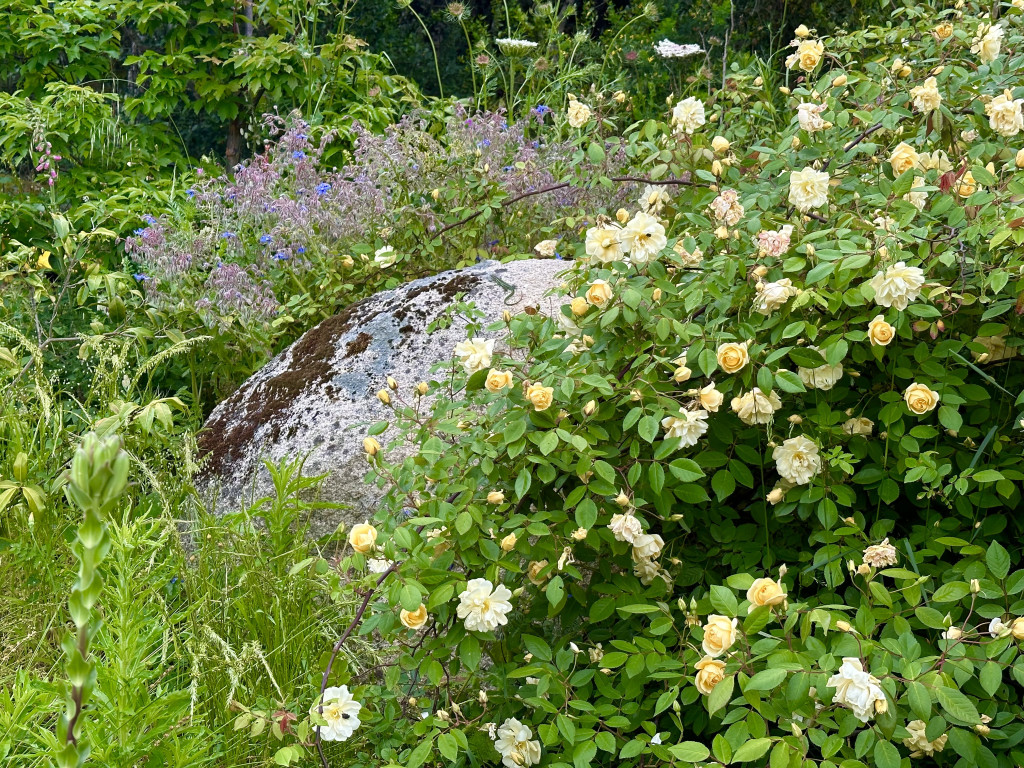
Its charm is so overwhelming that it’s impossible to believe that it has all been achieved in just three years. The way roses fling themselves with abandon over ancient stone throws my heart and mind back to Ninfa.
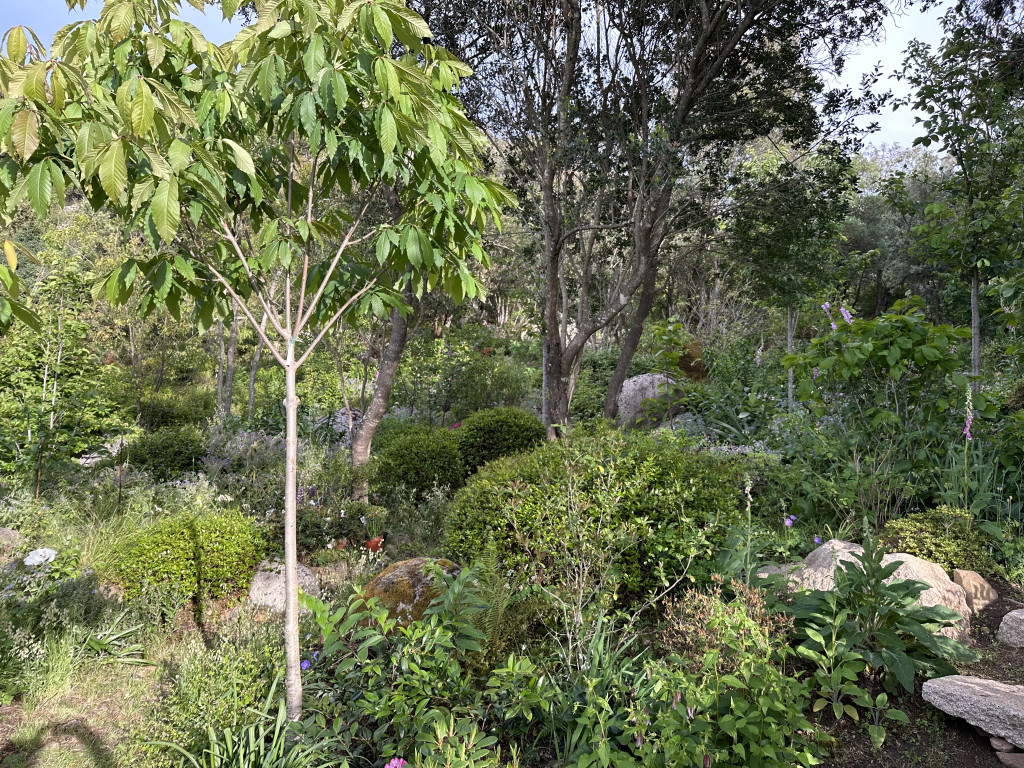
I love seeing these differences in approach, but as someone who is by nature a principle-distiller, I can’t help but also see really fundamental similarities. For instance, both gardens depend heavily on the repeated use of either a shape, or a kind of shape, to bring unity to their work. Marco’s garden takes the shape of goat- or wind-pruned shrubs and repeats it over and over, in perfect balance with those allowed free-form expression.
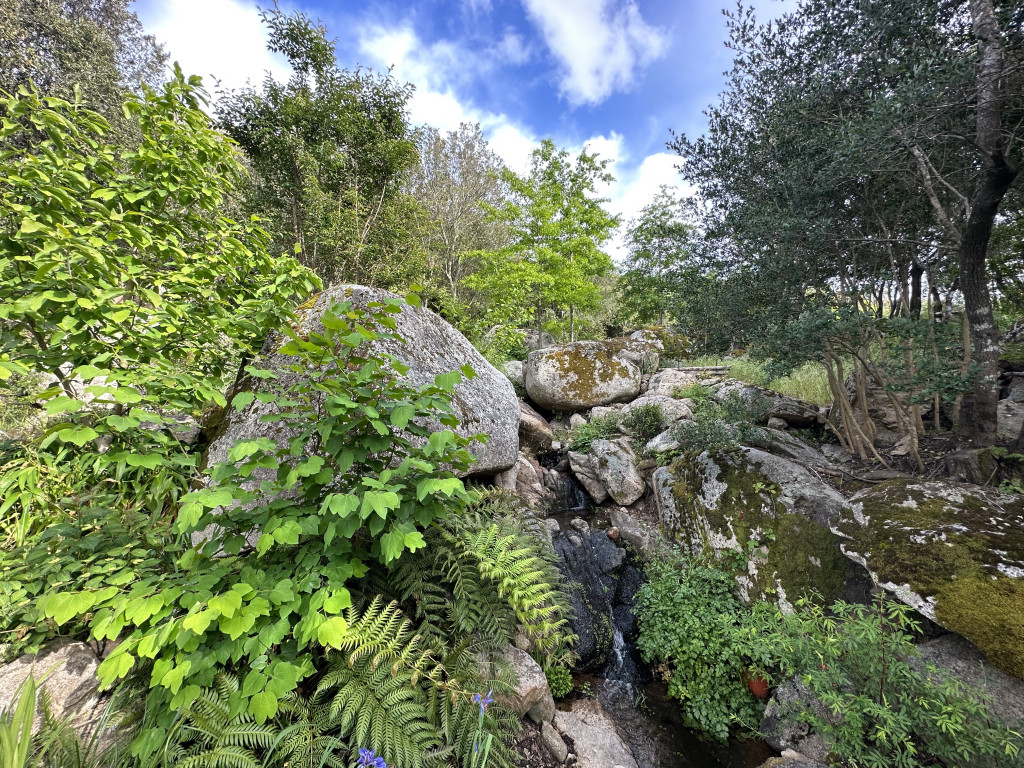
Maurizio’s garden relies on the massive shapes of natural boulders for its unity, and translates the same bulk and amoeboid form into the planting, with repeated clipped myrtles that, in their shape, speak the same language.
There’s so, so much more to say about these gardens, but I’m writing in a busy airport partway into a 38 hour flight home. I don’t have sufficient faith in the organisation of my thoughts to continue. So more anon.
And a whole lot more about this kind of discussion on design principle in our upcoming online symposium on June 3. I’m so looking forward to sharing my discussions with some of the most articulate and celebrated garden designers in the world, about their key design principles. These discussions are changing the way I think, and they’ll do the same for you. Click here for more information.
Also, we plant to take a travelling masterclass to Sicily and Sardinia in the relatively near future. We’d love you to join us!
well, you could hardly call these ‘beds’ I love the depth of these gardens. To have the luxury of space, you can be generous with plantings and still find that ‘unity’ as you say michael