
Everlastings, Paper daisies, Sun rays, Strawflowers. This loose gang of Australian flowers is one with such an iconic quality. The dry, textural petals vary from the hard beetle shells in confectionary colours to the delicate and paper-like. Together that distinctive texture as you run your thumb over the rim of the petals, with their particular rustle as you hang them to dry is the stuff that etches into plant memories. There is a playful experience to them though they have evolved with this resilient adaptation in response to the harsh summer dry in our continent.

A range of genera – Helichrysum, Xerochrysum, Chrysochepalum, Rhodanthe and others – all have evolved this quality that now sees the blooms admired for their namesake – a long flowering nature. As farm kids, we played among the local golden Sticky Everlastings (Xerochrysum viscosum) of Central Victoria. The Everlastings would spring up in neighbouring bushland, and keeping young fingers away from lingering on the petals was hard.

Now a gardener, the ephemeral delight of the Pink Paper Daisy (Rhodanthe chlorocephala) is hard to surpass. The speed from germinating seed to flower gives them that surreal, almost instantaneous quality compared to other annual flowers usually flowering within a ten to twelve-week window from sowing, if not sooner, especially if sown heading out of winter. A sweet little nod in the growing tip forms at the end of the stem to right itself up with bud, then flower. The blooms open and close endearingly according to light levels, shutting up shop as the dusk darkens or on a cloudy day.

Rhodanthe chlorocephala is the poster child of mass flowering events where it originates in Western and Southern Australia, so don’t deny the desire to sow them in a mass drift for a homegrown super bloom. But also, like any annual, these quick bloomers are like a Swiss army knife for the garden, fitting into little emerging gaps and meeting any desire for fast beauty. The everlasting bloom is genuinely enduring, and this beauty lives on if you preserve it at its peak by cutting when there is a large bud and at first opening Hung upside down, they dry, and the heroic bloom flowers on.
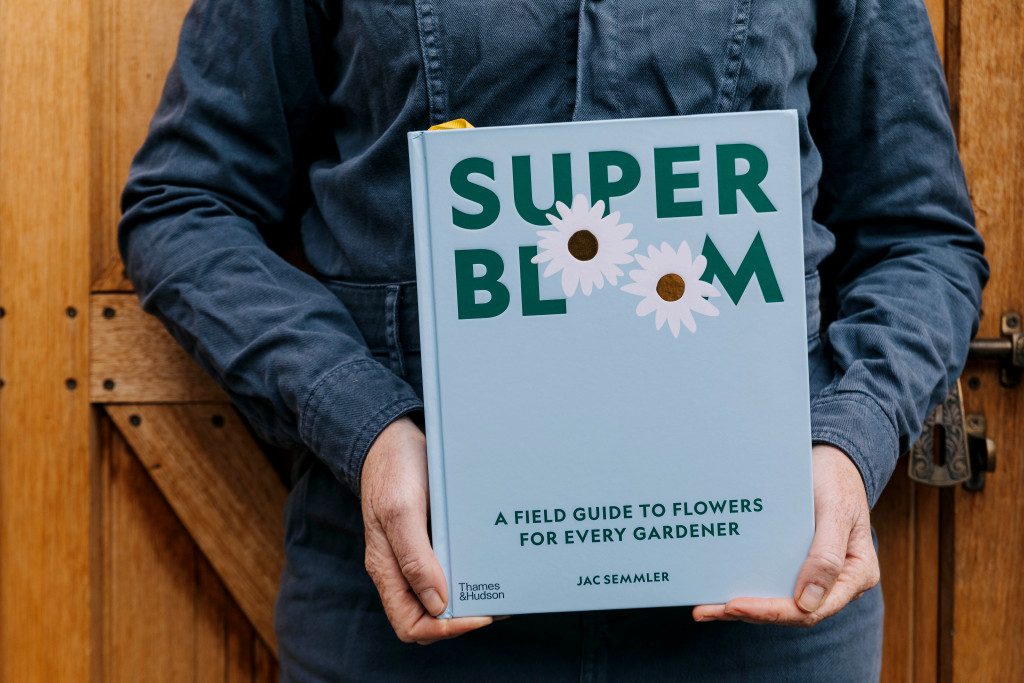
Super Bloom: A field guide to flowers for every gardener by Jac Semmler is published by Thames and Hudson with photography by Sarah Pannell with design and illustrations by Ashlea O’Neill.
Available online and through all great bookstores throughout Australia and New Zealand for release soon in the Northern Hemisphere.
Hi Jac, wondering about how they’d go being sown at other times. Have you tried an autumn sowing for an early spring flowering? Alternatively, how do you reckon they’d go with a mid spring sowing for a mid summer flowering?